
The world is moving fast. Faster than most people realize. And for millions of students across Africa, the risk of being left behind is not a distant threat — it is a daily reality.
At GiveBack Backpacks, we talk about the digital divide constantly. But what does it actually look like in numbers? Here is the data every parent, educator, and potential donor needs to understand — because the scale of this problem is far larger than most people know.
What Is the Digital Divide?
The digital divide refers to the gap between those who have access to modern technology — computers, the internet, and digital tools — and those who do not. In a world where education, employment, and opportunity are increasingly tied to technology, this gap is not just inconvenient. It is life-defining.
For students in Africa, the digital divide means showing up to school every day without the tools their peers in other parts of the world take for granted. It means falling behind in subjects that require computers. It means graduating into a job market that expects digital skills they were never given the chance to develop.
The Numbers
Only 18% of people across 39 African countries personally own a computer. Let that sink in. In a continent of over 1.4 billion people, fewer than 1 in 5 owns the device that has become essential to modern education and employment.
Only 10 to 15 percent of African youth receive any structured digital skills training. While students in North America and Europe are learning coding, data analysis, and digital design as standard parts of their curriculum, the vast majority of African students are receiving none of it.
Only 8.9 percent of global internet users are from Africa — despite the continent being home to nearly 18 percent of the world’s population. The gap between Africa’s share of the world’s people and its share of internet access tells the full story of the digital divide in one number.
830 million young Africans will enter the workforce by 2050. Most of them, if nothing changes, will do so without the digital skills the global economy demands. That is not a prediction — it is a trajectory.
40 percent of primary schools and 50 percent of lower secondary schools in Africa had internet access as of 2024. Which means that even in schools that exist, even where teachers show up and students attend, the connectivity needed for modern education is absent in the majority of classrooms.
Why This Matters for Middle and High School Students
The digital divide hits hardest during the critical years of secondary education — the years when students are building the skills and knowledge that will define their professional lives.
A student who reaches high school without ever using a computer is not just behind their international peers academically. They are behind in a way that is increasingly difficult to recover from. The gap compounds every year. By the time they graduate, the distance between what they know and what the job market requires can feel insurmountable.
This is not about luxury. This is not about having the latest technology. This is about having the basic tools that modern education requires — a laptop, an internet connection, and the training to use them.
Why Tech Access Is No Longer Optional
In 2026, digital literacy is not a bonus skill. It is a prerequisite for participation in the global economy. The fastest growing sectors — technology, finance, healthcare, communications — all require workers who are comfortable with digital tools from day one.
Countries that invest in digital education for their youth will produce a generation capable of competing globally. Countries that do not will watch that generation get left behind — not because of a lack of talent or ambition, but because of a lack of access.
Africa has no shortage of talent. It has a shortage of tools.
What GiveBack Backpacks Is Doing About It
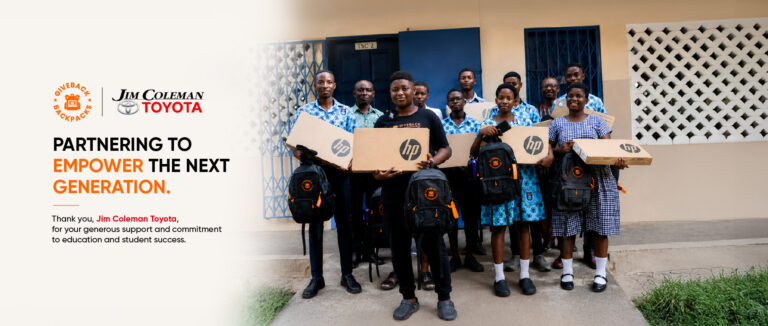
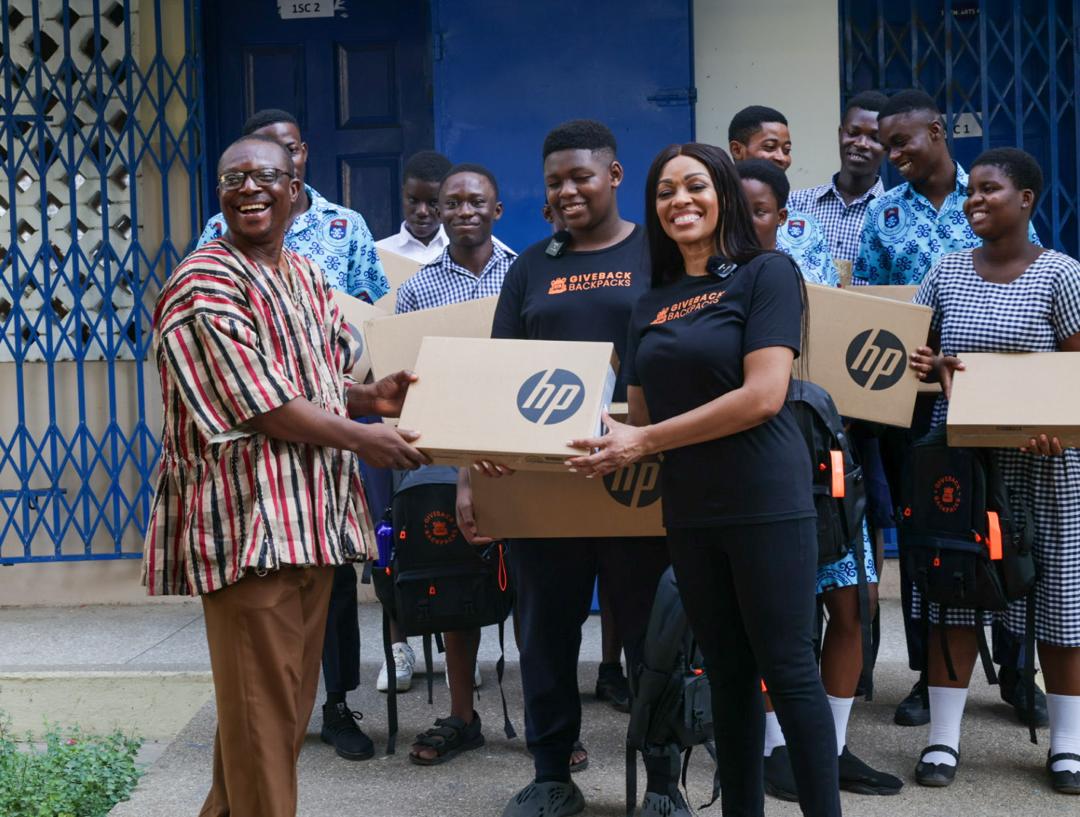
GiveBack Backpacks was founded on a simple but powerful belief: that no student should fall behind because of what they cannot afford. We send fully loaded backpacks to students in Africa — each one containing an HP laptop, school supplies, a water bottle, a power bank, and a pencil case. Everything a student needs to stop falling behind.
Each backpack costs $150. That is the full cost of equipping one child with everything they need to compete. Three people giving $50 each can change a student’s trajectory permanently.
We are a student-led organization, founded and operated by a high school student in Maryland. We have already made deliveries to students in Africa, secured corporate partnerships, and built a club at our home school that is growing into a network of chapters across Maryland.
But the work is far from done. The numbers above show how large the problem is. Every backpack we deliver is a step in the right direction — but we need more people to take that step with us.
How You Can Help
Donate $150 to fully equip one child with a laptop, backpack, and all the supplies they need.
Share this article with someone who needs to see it. Every person who understands the scale of this problem is a potential donor, partner, or advocate.
Refer a school, student, or NGO in Africa that needs help. DM us on Instagram at @giveback_backpacks or email us at info@givebackpacks.co.
Partner with us as a business or organization. Corporate partnerships allow us to scale our impact and reach more students faster.
The digital divide is a solvable problem. GiveBack Backpacks is proof of that. Join us.
GiveBack Backpacks is a student-led nonprofit based in Maryland that delivers laptops, backpacks, and school supplies to underserved students in Africa. $150 fully equips one child. To donate or partner with us, visit givebackpacks.co.